PROGRAMME NCAD Gallery
Instituting Commoning: A Platform for Un/Learning
Exhibition Opening: Thursday 29 January 2026, 6PM - 8PM. All are welcome to attend. Map Link.
Exhibition Opening Times: 30 January - Friday 27 February 2026, 11AM - 6PM.
EXHIBITING PRACTITIONERS
Dr Richard A. Carter, Michele Horrigan, Dr Ameera Kawash, with Studio Bark's U-Build modular system.
.
PUBLIC EVENTS All events fixed to the time zone in Ireland (GMT+0)
See further below to read event descriptions. Ticket links forthcoming.
1. The NCAD School for Un/Learning Workshops. Public Booking LINK.
Wednesday, 11 February 2026, 5-7PM, NCAD Gallery, Foyer, Street.
2. Multi-Story Act II: The Great Housing Crisis Caravanette of Revolt. Public Booking LINK.
Saturday, 21 February 2026, 10AM-2PM, NCAD Gallery.
3. Instituting Commoning Inquiry WE CANNOT WAIT FOR OUR FUTURE ART INSTITUTIONS: Public Booking LINK
Tuesday, 24 February 2026, 5-7PM. NCAD Gallery & Online.
4. Instituting Commoning Symposium Public Booking LINK
Wednesday, 25 February 2026, 10AM-5PM. NCAD Gallery.
_________________________________________________________________________
Historically, ‘the commons’ was used to describe an area of land that was neither public nor private. It described a common resource for anybody to use under certain rules, usually developed by a vested community.(1) Much of what was the historical commons is private property today, a process which began in the Eighteenth Century with The Enclosure Movement. Contemporary society has seen newer enclosures of the commons that encompass intellectual property, language, seeds and genetic material. In response there has been a resurgence of commoning led by commoners calling for a more livable set of economic, social and political conditions. These commoners are experimenting with methods of organising social production differently, in ways that forefront mutual care, equality and social justice. (2)
In programming Instituting Commoning: A Platform for Un/Learning in the NCAD Gallery, we define our use of the term ‘commoning’ in this contemporary rediscovery of the meaning of 'the commons' and its governance.(3)
Instituting Commoning: A Platform for Un/Learning brings together a network of artistic and academic practices through the exchange of viewpoints, the sharing of resources and the creation of new social bonds. The conceptual framework for exhibition and programme has been conceived through an attempt to materially platform or occupy the institutional Gallery space as a 'commons' – made manifest through demarcated floor markings and built raised platform using elements of Studio Bark’s U-Build modular system. The platform is an inclusionary space that frames artworks by Dr Richard A. Carter, Michele Horrigan, and Dr Ameera Kawash and will also be used to stage event-based interactions, process-based work, workshops, symposia, housing activists and community group meetings, pedagogical un/learning workshops, and specific 'commoning' research threads from NCAD Staff members: Michelle Browne, Anne Kelly, Gareth Kennedy, Dr Emma Mahony, Dr Tom O'Dea, Seoidín O'Sullivan, and Dr Fiona Whelan. The staff involved have recently completed a Marie Skłodowska-Curie Horizon 2020 EU Staff Exchange research action entitled, Spatial Practices in Art and Architecture for Empathetic Exchange (SpaceX-Rise), 2022–26, and some of the events have been directly inspired by their research. Link: SpaceX-RISE.
.
Instituting Commoning: A Platform for Un/Learning is curated by Anne Kelly and programmed with Dr Emma Mahony, Michelle Browne, Gareth Kennedy,, Dr Tom O'Dea, Seoidín O'Sullivan, and Dr Fiona Whelan.
.
1. Fountedaki, Eirini & Pronger, Rachel, 'What is Commons? A Conversation with Stavros Stavrides', Foyer Conversations: Cinema of Commoning [podcast], Monday, June 24, 2024. Season 1, Ep. 1. Accessed 01.01.2026. Link
2. Federici, Silvia. (2004) Caliban and the Witch: Women, the Body and Primitive Accumulation. Brooklyn, NY: Autonomedia.
3. Ostrom, Elinor,(1991), Governing the Commons: The Evolution of Institutions for Collective Action (Political Economy of Institutions and Decisions). Cambridge Uni Press.
.
PUBLIC EVENTS
1
The NCAD School for Un/Learning, Un/Learning Workshops: Wed, 11 Feb 2026, 5-7PM, NCAD Gallery, Foyer, Street. Public Booking LINK.
1. UNLEARNING EXERCISE #6: STANDARDISATION
Devised & facilitated by: Linda Hederman, Anne Reilly and Ludwig Schaible.
2. UNLEARNING EXERCISE #7: FINDING COMMON GROUND.
Devised & facilitated by: Megan Atkinson, Anna Ebeling and Christopher Roman.
3. UNLEARNING EXERCISE #4: SOCIAL CAPITAL.
Devised & facilitated by: Romane Glas, Karen Matias and Leyette Moll.
4. UNLEARNING EXERCISE #5: UNWORKING C.V.
Devised & facilitated by: Loor Amin, Cúan Cusack and Leanne Dooley.
NCAD MA/MFA Art & Social Action students, working with Dr Emma Mahony, have devised four unlearning exercises specifically for NCAD. They will deliver these exercises with the participation of staff and students who are invited to enrol in the NCAD School for Unlearning. Upon completion of the exercises participants will graduate. Unlearning is both a discourse and a practice that involves the critical appraisal of accepted “truths”, power relations and practices, as well as an appraisal of the role the individual plays within this matrix. Unlearning calls on those who practice it to challenge not just what they know and believe to be untrue and unjust, but also deeply rooted habits and attitudes that are unjust. Habits, however, are not just practiced by individuals, but are also performed by institutions where they comprise the often invisible and unquestioned organisational actions and structures that reproduce systemic inequalities. The purpose of The NCAD School for Unlearning is to apply unlearning to NCAD to unpack, unsettle and undo any unjust habits and attitudes. Workshops are additionally supported by Anne Kelly.
2
Multi-Story Act II: The Great Housing Crisis Caravanette of Revolt: Sat, 21 Feb 2026, 10AM-2PM, NCAD Gallery. Public Booking LINK.
Housing Action Now (HAN) invites you to: Come and Join the Great Housing Crisis Caravan of Revolt - making the stories and images for revolutionary housing change. Let’s Come together to change the housing crisis narrative. Lets make housing happen For All.
Housing Action Now will occupy the NCAD Gallery, with a half day of workshops, film, activist art and open discussion around the potential of artistic responses to the housing emergency, asking critical questions such as: Does the Irish Housing System work for you? The workshops will be facilitated by artists Evelyn Broderick and Aengus Hennessy, working with Housing Action Now as part of the long term project Multi-Story – Creative Engagement for Housing Change. There will be activists from Housing Action Now, Community Action Tenants Union, Movement of Asylum Seekers in Ireland and other housing activist groups. All are welcome.
Multi-Story Act II: The Great Housing Crisis Caravanette of Revolt is led by artist Evelyn Broderick and aims to activate conversations, performances, and spaces to share solutions for the Housing Crisis. Multi-Story Act II is supported by Create – the National Development Agency for Collaborative Arts, through the AIC Project Realisation Award 2025.
The Multi-Story project began in 2020, with artists Fiona Whelan and Feidlim Cannon, and Housing Action Now (HAN), supported by a Create commission. The project engaged housing activists in a unique online collaborative arts process, exploring direct experiences of the housing crisis through visual and performative story-telling. In 2022, Multi Story Act I: The Apology was launched, publicly acknowledging the failures of the Irish State with regards to housing policy and provision in this country. Housing Action Now is a collective of community workers, researchers, activists and artists concerned with the growing housing crisis in Ireland. HAN works with representatives from renters unions, those working with asylum seekers, refugees, disabled people, Traveller organisations, housing and homelessness and those in the student accommodation housing sectors.
_________________________________________________________________________
3
Instituting Commoning Inquiry: WE CANNOT WAIT FOR OUR FUTURE ART INSTITUTIONS
Tue, 24 Feb 2026, 5-7PM. NCAD Gallery. Public ticket LINK. An event with in-person participation hosted by NCAD Gallery.
‘The dominant system doesn’t dominate because most people agree with it, it dominates because we can’t imagine an alternative’ (Duncombe and Lambert, 2021: 319).
“WE CANNOT WAIT FOR OUR FUTURE ART INSTITUTIONS” is both a statement and a demand that responds to the urgency of the polycrisis the art institution faces. It is also a refusal. It refuses to accept that there is no alternative, that we cannot imagine things otherwise.
The participants will debate emergent practices and make propositions for the future art institution that encompass values that are anathema to those that shape our current cultural policies. These alternative values include (but are not limited to): collectivity, solidarity, sustainability, study, the undercommons, situated knowledge and infrastructural critique.
Participants:
Xenia Kalpaktsoglou, Curator, Laboratory for the Urban Commons, Athens Link
Marysia Więckiewicz, Curator, Project Arts Centre, Dublin Link
Anne Kelly, Curator, NCAD Gallery, Dublin Link
Moderator: Emma Mahony, Lecturer in Visual Culture, NCAD, Dublin.
_________________________________________________________________________
4
Instituting Commoning Symposium: Wed, 25 Feb 2026, 10AM-5PM. NCAD Gallery. Registration 9.30am. Public ticket LINK. Speakers: Dr Richard A. Carter, Michele Horrigan, and Dr Ameera Kawash. Researchers: Michelle Browne, Anne Kelly, Gareth Kennedy, Dr Emma Mahony, Dr Tom O’Dea, Seoidín O'Sullivan.
.
10-11AM Un/Learning Workshop Part 1 - Introduction to Unlearning with Dr Emma Mahony & Dr Tom O'Dea. Location: NCAD Gallery Link & Foyer.
11AM-12PM Elevenses for the “Hungry Months” with Gareth Kennedy & FIELD Students. ** This event is capped at a capacity of 40 persons -
~ after ticket selection, there will be an option to select this additional 'product'. ** Location: NCAD FIELD
12-1PM Un/Learning Workshop Part 2 - Developing & Testing Exercises with Dr Emma Mahony & Dr Tom O'Dea. NCAD Gallery & Foyer.
1-2PM LUNCH Goodies
2-3PM Exhibiting Practitioners Conversation and Q&A, Dr Richard A. Carter, Michele Horrigan, Dr Ameera Kawash with Anne Kelly. NCAD Gallery.
3-4PM ‘Playful Possibilities’ with Seoidín O’Sullivan & Dr Dominic Thorpe.. NCAD Gallery & Foyer.
4-5PM ‘The Artist Collective Game’ with Dr Tom O'Dea & Michelle Browne. NCAD Gallery & Foyer.
.
* Unlearning Workshop In this two part workshop (10am-11am and 12pm-1pm) participants will be introduced to the practice and discourse of unlearning. Then, working in small groups, they will devise and trial their own unlearning exercises. Unlearning is both a discourse and a practice that involves the critical appraisal of accepted “truths”, power relations and practices, as well as an appraisal of the role the individual plays within this matrix. It calls on those who practice it to challenge not just what they know and believe to be untrue and unjust, but also deeply rooted habits and attitudes that are unjust. Habits are also performed by institutions where they comprise the often invisible organisational actions and structures that reproduce systemic inequalities. The purpose of the Unlearning Workshop is to develop unlearning exercises which can unpack, unsettle and undo unjust institutional habits and attitudes.
The Unlearning Workshop is led by Emma Mahony and Tom O’Dea and emerges from research conducted during the Marie Skłodowska-Curie Horizon 2020 RISE transdisciplinary research action, Spatial Practices in Art and Architecture for Empathetic Exchange (SPACEX), 2022–26.
* Elevenses for the “Hungry Months” hosted by artist Gareth Kennedy, and Students from NCAD FIELD programme. Since 2020, Gareth has been charged with running the Studio+ NCAD FIELD module in a derelict brownfield site beside the College which is in the process of being reappraised as a Novel Ecology. FIELD students served the participants pancakes cooked on a reclaimed manhole cover over a campfire and also offered tours of the site.
* Instituting Commoning Exhibiting Artists Talks w/ Q&A - Dr Richard A. Carter, Michele Horrigan, Dr Ameera Kawash with Anne Kelly.
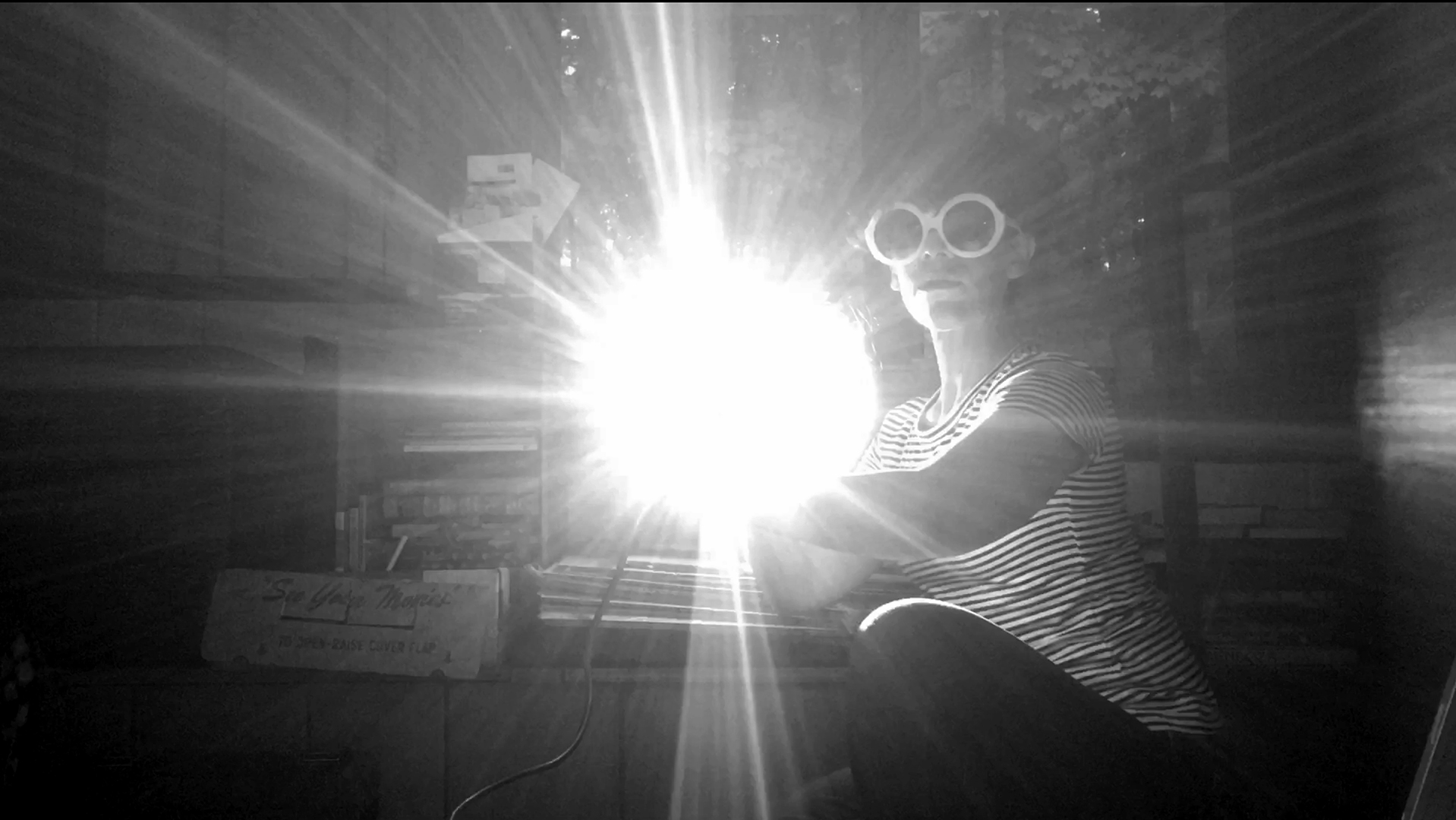
This presentation & discussion event locates converging commonalities through practitioners' subject matter, processes, and contexts related to: meanings and relationships between art and the public realm; narratives of place, dwelling and environment; erasure resistance across material and digital forms and through cultural archiving; and addresses a broad range of questions concerning how digital systems influence how we sense and make sense of the world, defining different possibilities of action and expression.
Instituting Commoning Exhibiting Artists Talks is led by Anne Kelly and emerges from research conducted during the Marie Skłodowska-Curie Horizon 2020 RISE transdisciplinary research action, Spatial Practices in Art and Architecture for Empathetic Exchange (SPACEX), 2022–26.
* Playful Possibilities session draws on an elective designed by artists Seoidín O’Sullivan and Dr Dominic Thorpe for NCAD’s Fine Art students. Developed in response to student anxiety, self-consciousness, and the lingering effects of isolation after Covid, this session offers an embodied, playful approach to learning in shared studio spaces. Through movement, improvisation, and playful exercises, participants are encouraged to let go of perfectionism, take creative risks, and reconnect with the body as a source of knowledge and confidence. Play is used as a serious pedagogical tool—supporting experimentation, reframing failure, and fostering connection, resilience, and creative flow.
* The "Artist Collective Game" is a game wherein a group develops and shares the tactics and tools required to build a successful artist collective. Throughout the game players build on their own experiences of collaboration along with their artistic practices, skills and references to gather the resources needed for their collective. Led by Dr Tom O'Dea & Michelle Browne.
Michelle Browne is an artist and curator based in Dublin, Ireland. She is a lecturer in the Department of Sculpture and Expanded Practice at NCAD and her teaching has focused on spatial practices with an emphasis on participation, collaboration and performative strategies.
Browne’s art practice is concerned with what it means to live together; how society organises itself – socially, politically and spatially – and how these relationships play out in the public arena. Much of her work is site specific, often using performative events to draw people together to consider alternative uses for public spaces. She is also interested in how ephemeral performative and participatory events are remembered and archived. Browne has curated a number of exhibitions and events in and for public space and from 2017-2019 she was part of Creative Producers International, a development programme to encourage new kinds of conversations with creative communities, citizens, and city authorities to effect change in their cities.
Anne Kelly, cultural practitioner, is the curator at the National College of Art and Design, Dublin (NCAD, 2011-) where she operates the NCAD Gallery with particular emphasis on transdisciplinary integrated public programming aligned to institution-specific research directions, the commissioning of new work and fostering collaborative creative partnerships. As well as, working cross-departmentally and lecturing on the School of Visual Culture elective programme. She is a National College of Art and Design, Dublin, BA Fine Art and Trinity College Dublin MSc Comp Sci Multimedia Systems graduate and a recipient of Arts Council of Ireland, CREATE: National Development Agency for Collaborative Arts, Culture Ireland and County Council artist practice funding awards.
For SpaceX-Rise, Anne Kelly’s research inquiry focuses on the potentialities within a commoning approach in establishing an operative critical spatial practice that functions as a site-specific framework toward public arts programming: exploring long and short social models inclusive of transdisciplinary participation networks engaging existing cultural infrastructures.
Gareth Kennedy’s work explores the social agency of the handcrafted in the 21st century and generates ‘communities of interest’ around the production and performance of experimental material cultures. Informed by an anthropological approach these works draw on the layered histories of a location. Projects are embedded, evolve over time, and are enacted by diverse publics and individuals. With the hyperdigitisation of our everyday, Kennedy is interested in the use of anachronistic processes and technologies to produce ‘critical anachronism’ and generate contemporary encounter and experience. He often works with individuals who hold skills or knowledge that has been transmitted across generations to this end.
In 2009, he co-represented Ireland at the 53rd Venice Biennale alongside artist Sarah Browne and their collaborative practice, Kennedy Browne. In 2015 he was long listed for the prestigious VISIBLE Award for Die Unbequeme Wissenschaft (‘The Uncomfortable Science’), which explored a troubling history of anthropology in the Austrian/Italian Alps and it’s legacy. He is currently undertaking commissions for the National Children’s Hospital and Fingal County Council in Dublin. He is also developing a Microforest project over 2 years in a Dublin school through SUPERPROJECTS. Recent exhibitions include: Metabolic time / Am meitibileach, PROJECT Art Centre, Dublin; Data Streams, Glucksman Gallery, Cork; Intensive Places, 6th Tallinn Biennale, Estonia; Complexo Collosso, CIAJG, Guimarães, Portugal (all 2021-22). He teaches Sculpture and Expanded Practice and is lead on the new Studio+ FIELD module at NCAD, Dublin which charges students with developing new ‘Naturecultures’ in a brown Field / ‘ Novel Ecology site beside the college.
Dr Emma Mahony has worked as a lecturer on graduate and undergraduate programmes in the School of Visual Culture since 2009, where she is currently Course Leader for the BA in Visual Culture. She is also a principal investigator on a MSC H2020 RISE transdisciplinary research action (grant €690,000), entitled Spatial Practices in Art and ArChitecture for Empathetic EXchange (SPACEX) 2022-26. She sits on the editorial board of Art & the Public Sphere journal. From 2004-8 she was Exhibition Curator for Hayward Touring, Southbank Centre, London, and from 1999-2004 she worked as an exhibition organiser at a number of public and private art galleries in London including Hayward Gallery, Chisenhale Gallery, Jerwood Space and The Approach. She was published widely on contemporary art, activism and curatorial studies as a contributor to peer reviewed journals including: Anarchist Studies Journal, The Journal of Aesthetics and Protest, FIELD A Journal of Socially-Engaged Art Criticism, Performance Research; Curator: The Museum Journal; Museum & Society, and Art & the Public Sphere. She is co-editor of The Routledge Companion to Spatial Practices and the Urban Commons (with Melanie Jordan, Andrew Hewitt and Socrates Stratis forthcoming 01 January, 2026) and she has recently published a book chapter ‘From Institutional to Interstitial Critique: the resistant force that is liberating the neoliberal museum from below’, for the Routledge Companion to Contemporary Art, Visual Culture, and Climate Change (2021, eds. T.J Demos, E. E. Scott and S. Banerjee). In 2023 she organised a symposium on commoning and radical care, entitled From Cultural Value to Social Wealth at NCAD in conjunction with the SPACEX research action, UCD and Project Arts Centre. In 2019 she led the Irish Museum of Modern Art (IMMA) Summer School on Art and Politics and she regularly contributes to their Summer Schools. In 2016 she organised and chaired a symposium entitled Beyond Art Activism at IMMA. She has also been invited to take part in many public events at galleries and universities in Ireland and abroad, including University of Amsterdam (UvA); Loughborough University; BAK, Utrecht; and IMMA. She is a regular peer reviewer for a number of academic journals including Social Inclusion (Cogitatio Press); Curator: The Museum Journal (Wiley); Art & the Public Sphere, (Intellect); and Lateral: Journal of the Cultural Studies Association (Cultural Studies Association).
Seoidín O’Sulllivan Seoidín O’Sullivan is an artist, educator, and interdisciplinary researcher whose collaborative practice brings communities together to protect and reimagine shared ecological commons. Working across a range of creative media, her work explores relationships between people, place, and more-than-human ecologies.
Grounded in participatory and socially engaged art methodologies, Seoidín collaborates with multidisciplinary teams to reveal hidden ecological systems, co-create collective imaginaries, and work towards just multi-species futures in the context of climate crisis. Her practice sits within the field of Critical Ecologies, using creative processes as tools for dialogue, care, and ecological action. Outputs include drawing, installation, video, publications, walks, and pedagogical exchange.
Seoidín lectures in Fine Art at the National College of Art and Design (NCAD), Dublin, where her teaching emphasises embodied practice, experiential learning, collective making, and critical engagement with place. At NCAD, she co-leads the Postgraduate Diploma in Art and Ecology, teaches Sustainable Exhibition Making with the Creative Futures Academy, and also lectures in Critical Cultures and First Year Studies.
Her work has been exhibited nationally and internationally. Recent exhibitions include The Sky is Falling (Ormston House, 2024), Corncrake Dollar (EVA International, 2023), and Holdings (Solstice Arts Centre, 2023). In 2023, she was awarded an artist residency at Dún Laoghaire Baths, where she developed Sea Salon, a collective project inspired by the writings of Rachel Carson. She was also a contributor to Mapping Green Dublin (2022), a collaborative research and community mapping project with UCD Geography and Common Ground, focused on mapping Dublin’s urban tree canopy. www.seoidinosullivan.com
Dr Tom O’Dea is an artist who works with mixed-media sculpture and social practice to interrogate the political implications of practices of computation and organisation in contemporary society. His work explores ways to understand how different forms of knowledge impact upon our ways of acting and being the world.
His project – The Department of Embedded Knowledge – explores the role of different forms of knowledge in the lived experience and administration of the city. The department interrogates knowledge that is embedded in people and in places, in communities and in relationships, in the multiple forms of the living and in that which is not.
Dr. Fiona Whelan is an artist, writer and Programme Leader of the MA/MFA Art and Social Action at NCAD. Her arts practice is committed to exploring and responding to systemic power relations and inequalities through long-term collaborations with diverse individuals, groups and organisations. These durational and multi-faceted processes emerge publicly as visual, spatial, performative and dialogical encounters in which multiple power relations are exposed. fionawhelan.com / whatdoesheneed.com / theforestthatwontforget.ie
EXHIBITING PRACTITIONERS INFORMATION
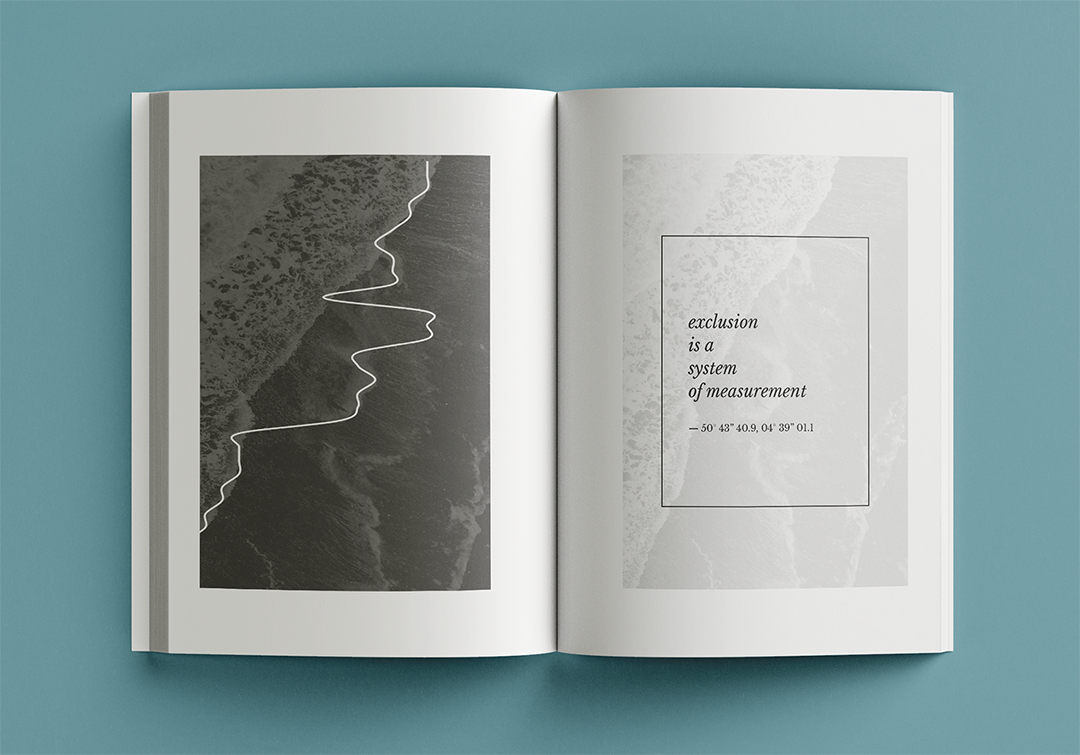
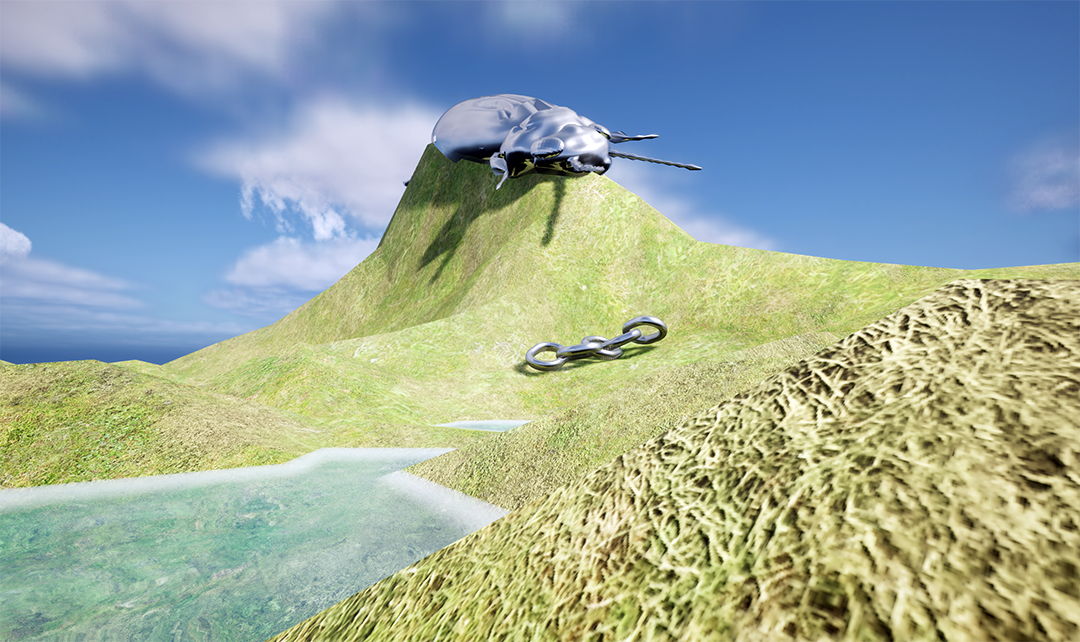
Image credit: Waveform, 2019, Richard A. Carter. Page Spread (closing diptych, 2023 online edition). Courtesy of the artist.
Dr. Richard A Carter is a Senior Lecturer in Digital Culture at the University of York. Carter’s research addresses a broad range of questions concerning how digital systems influence how we sense and make sense of the world, defining different possibilities of action and expression. A key aspect of Carter's research concerns telling alternative stories about the nature of our digital environment, inviting us to rethink its possibilities beyond those we are usually presented with. Critically informed speculation, experimentation, indeterminacy, and possibility form a cornerstone of Carter’s research activities, which are conducted across a wide range of technologies, formats, and modes—including drones and satellites, machine vision and artificial intelligence, generative algorithms, and virtual worlds. LINK
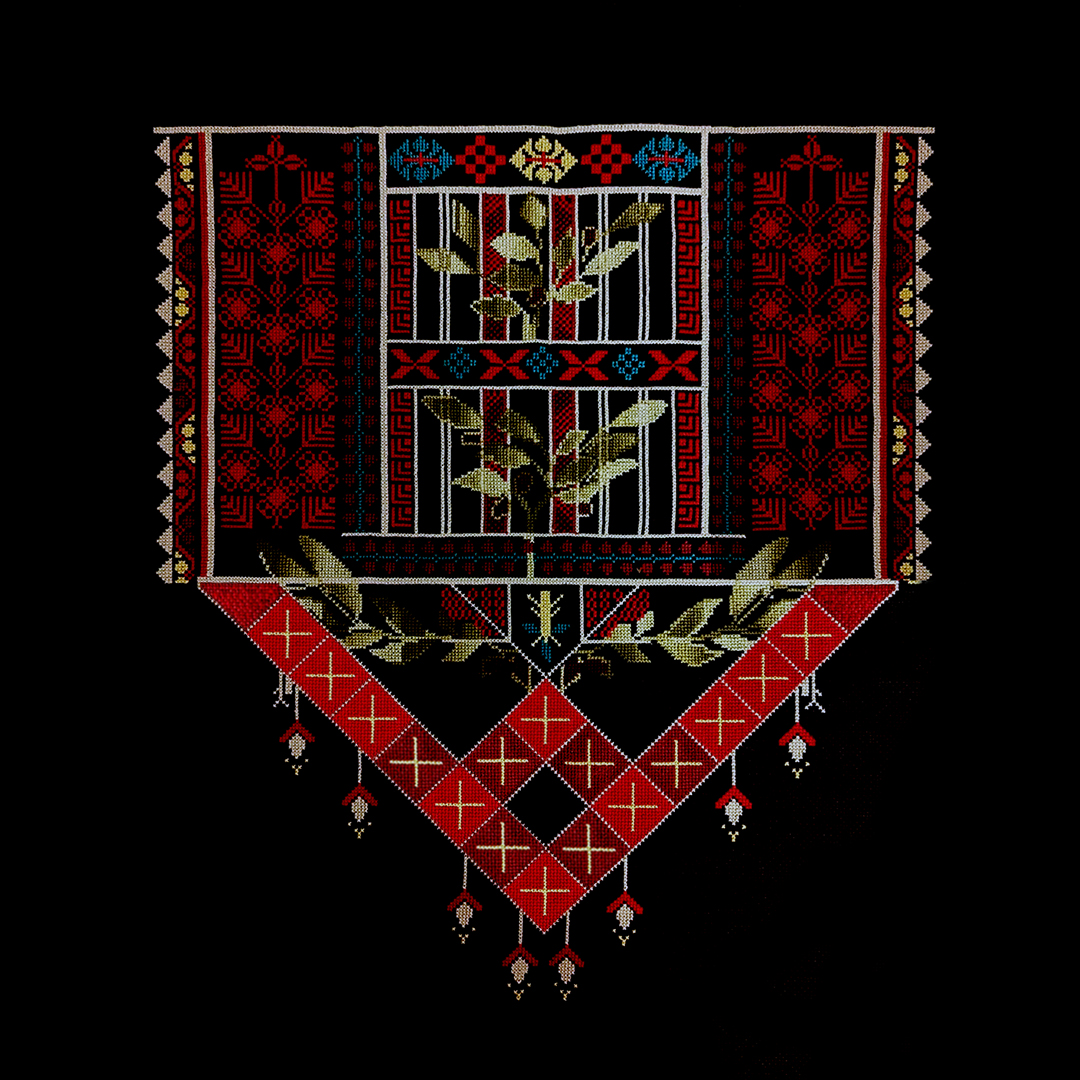
Ameera Kawash is a Palestinian-Iraqi-American artist whose work explores relations between cultural archiving, generative AI systems, and algorithmic bias. She examines the tensions between preservation and generation, asking how pattern-based knowledge systems such as embroidery and machine learning encode, transmit, and resist erasure across material and digital forms. Ameera holds a practice-based PhD from the Royal College of Art. She is co-founder of Ark Knowledge Networks, developing AI systems for low-resource languages and at-risk archives, and Future Botanic, creating cultural interfaces for sustainable infrastructures. Her work has been exhibited internationally and recognized through awards including the S+T+ARTS Prize Africa Award and the Terra Carta Design Lab.
The exhibited works are created through Tatreez Garden, a generative AI system trained on Palestinian embroidery patterns combined with indigenous plant forms. Reinterpreting tatreez as a computational craft, the project invites audiences to participate in a living archive that evolves across time and media: from digital generation to video installation to hand-embroidered textiles created in collaboration with Lali Pali, an initiative working with Palestinian women in refugee camps in Lebanon. Rather than claiming to preserve or translate traditional practices, it explores what new forms of cultural transmission become possible when these patterns are encoded algorithmically, producing alternate materialities that resist both cultural and technological erasure. The majlis or ‘sitting space’ functions as a commons, a shared space for gathering, observing, and sharing knowledge, as has been historically true throughout the Levant and Arab world. LINK
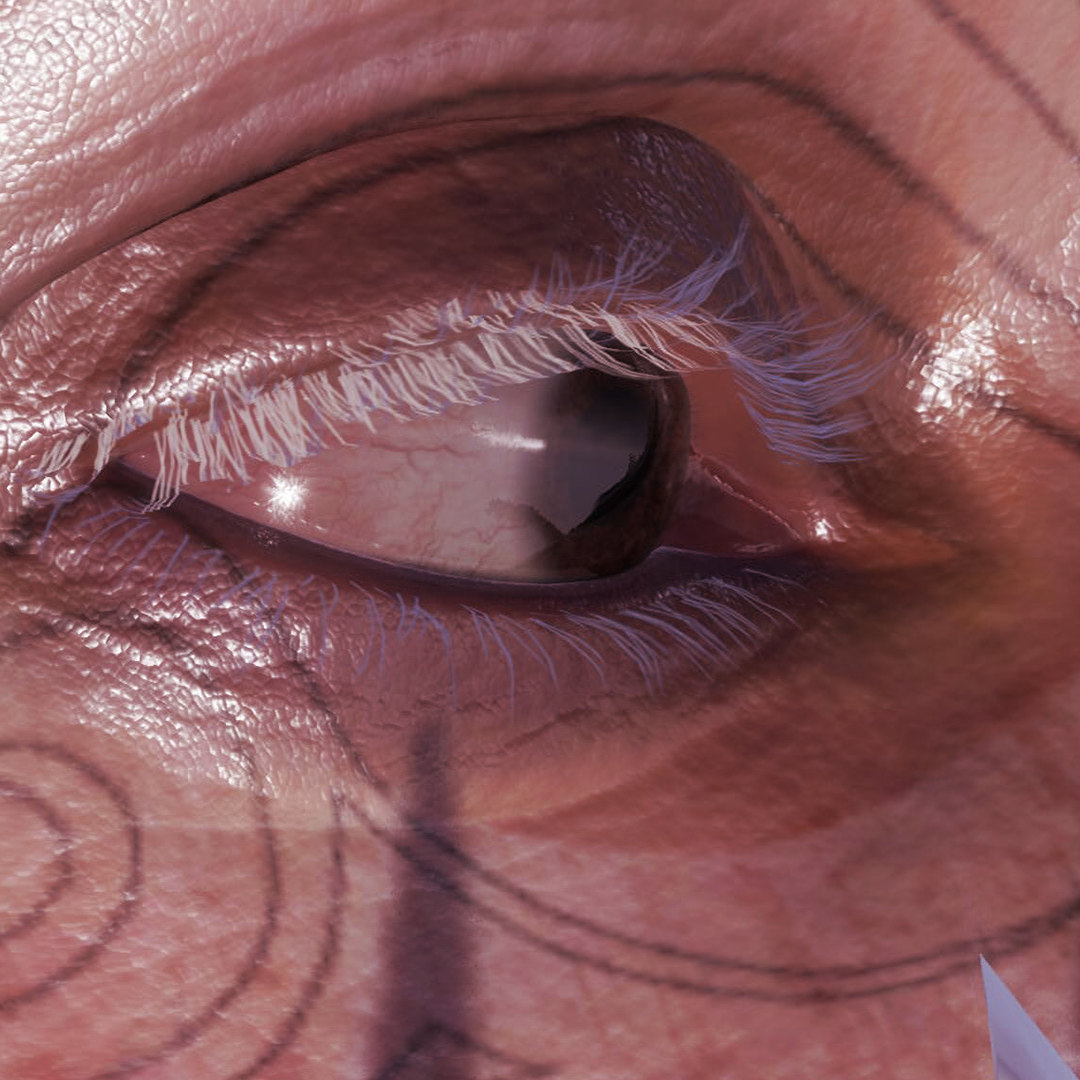
Michele Horrigan is an Irish artist and independent curator. Since 2006, she is founder and curator of Askeaton Contemporary Arts, facilitating artist experimentation and residencies, exhibitions and publication production in rural County Limerick, Ireland. Many artworks made in this context have subsequently been presented throughout the world in exhibitions, art biennials and film festivals. She is editor and publisher of A.C.A. PUBLIC, a publication venture with over twenty titles exploring the many meanings and relationships between art and the public realm. Her artworks made over the last two decades have investigated narratives of place, dwelling and environment, with an ever-increasing focus on ecological issues. Resulting videos and installations have been presented at Rubin Foundation, New York; Tilburg University; Tenerife Espacio de las Artes, Schloss Britz, Berlin; Frankfurter Kunstverein and Temple Bar Gallery & Studios, Dublin amongst others. LINK
FURTHER INFORMATION
Studio Bark Design Studio, U-Build - Studio Bark .are science-driven, unable to ignore the facts of the climate emergency and to continue with business as usual. Are forward thinking in their work, vocal in communicating what they believe in, and courageous in their ambitions for our collective future. They engage with industry and beyond to drive sustainable technologies and conversations forward. Are generous with their knowledge and ideas for how industry can improve, sharing their programmes and making their research open source.
Are motivated by compassion towards people, the planet and each other. They envision a world where everyone’s social needs and welfare are met. They are passionate about protecting and restoring the planet for future generations. They are dedicated to cultivating a studio grounded in kindness, respect, transparency and fairness, and recognise the need to address the diversity deficit within our industry and wider society. They treat their clients with care and will sit alongside you through the unique journey of your project, providing our knowledge, experience, and a listening ear.
They take responsibility for their work, are thorough in their research, and committed to project success. They are sincere in their approach to their client's needs, and attentive to the nuanced requirements of individual project. They are methodical and careful in their business practices, ensuring day-to-day consistency alongside long-term resilience. They place learning in high regard, promoting upskilling within their team to consistently raise their knowledge and abilities, viewing each project as an opportunity to expand their expertise. Link
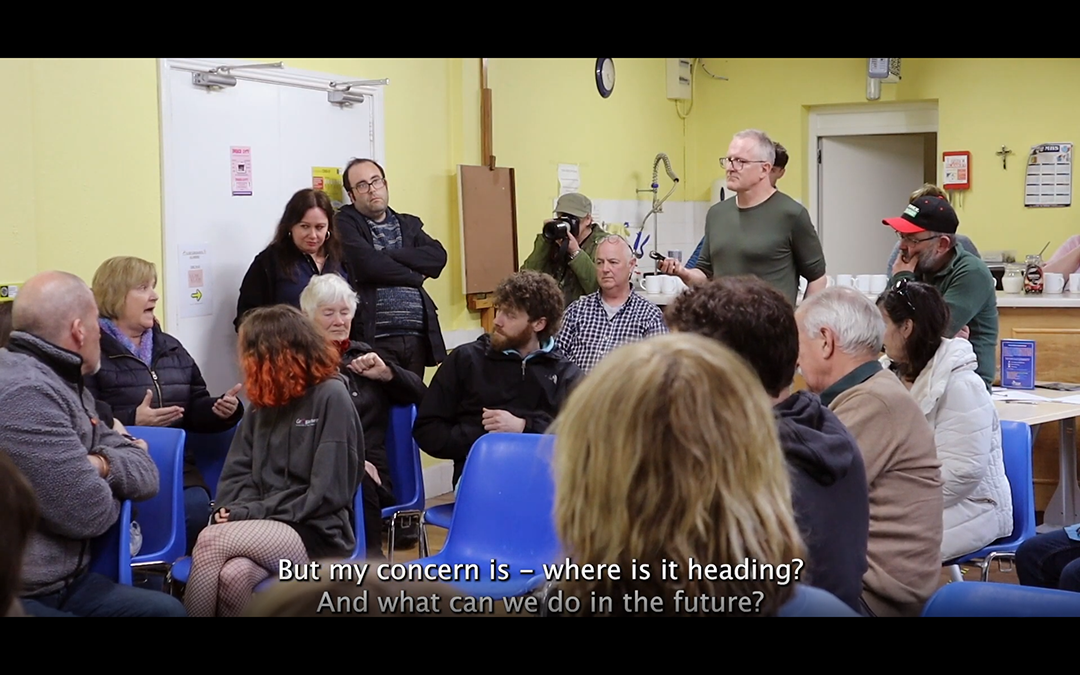
Multi-Story: Creative Engagement with Housing Change began in 2020. The first public act from the project The Apology (2022) was created by artists Fiona Whelan and Feidlim Cannon and Housing Action Now (HAN), through an online collaborative arts process, exploring direct experiences of housing injustice through collective writing and performative storytelling. The performance, by Housing Action Now member Paula Kearney, publicly acknowledges the failures of the Irish State with regards to housing policy and provision in this country. Having been launched at a major national gathering of housing activists online, the filmed performance has since been screened in multiple contexts including community centres, arts and cultural institutions, educational institutions and at private and public events throughout the country. On the 2nd March 2022, The Apology was read into public record at Seanad Éireann by Senators Lynn Ruane and Eileen Ní Fhloinn as part of a Seanad Private Members Motion on Housing brought by Senators Ruane, Ní Fhloinn, Higgins and Black. The Apology script and performance serve as prompts and resources to all individuals and organisations committed to housing justice in Ireland. Multi-Story Act II is now in progress, led by artists Evelyn Broderick and Aengus Hennessy and HAN. Multi-Story Act 1: The Apology was supported by Create, the national development agency for collaborative arts, through the Arts Council’s Commissions Award 2020. Multi-Story Act II is supported by Create, through the AIC Project Realisation Award 2025.
Evelyn Broderick is a visual artist, maker and ceoltóir. Her praxis MAKING|THINKING is an open dialogue that evolves through the interactions of the communities she engages with. Evelyn develops socially engaged structures to shackle and bind sculpture, printmaking and sound together in order to question the role making has in a both social and collective context. As a traditional Irish flute player, Evelyn’s sculptural work draws on the performative collective experience intrinsic to Irish traditional music. Evelyn was 2020/2021’s artist in residence at UCD’s Parity Studios at the College of Social Science and Law, the recipient of the Common Ground 2022 residency award – A Radical Imagination, which ran from April to December 2022 and was extended to the end of 2023, and the recipients of 2023 Artist in the Community Scheme Bursaries.
Xenia Kalpaktsoglou is an Athens-based researcher, curator, and co-founding member of the architectural and artistic research collective, Laboratory for the Urban Commons / Neo Cosmos. Her practice is rooted in collective curatorial methodologies, and the active engagement with independent artistic initiatives as a means of re-negotiating production and exchange protocols between cultural producers and institutions. She co-founded the Athens Biennale, independent non-profit organisation, which she co-directed until 2016. During that time, she was actively involved in curating and coordinating exhibitions and projects for the organisation, primarily as part of the curatorial trio XYZ, but also with other temporary curatorial formations. Her curatorial work includes the early editions Destroy Athens (2007) and MONODROME (2011) among others. Since 2016, she has focused on artistic research and education, lecturing in programmes (including the Sandberg Instituut / Dirty Art Department, and the Zurich University of the Arts/ Shared Campus- Transcultural Collaboration programme) and collaborating in research projects on independent art initiatives (most recently via SpaceX – Spatial Practices in Art and Architecture for Empathetic Exchange, with the University of Coventry (2023–25). https://www.neocosmos.gr
Marysia Więckiewicz, Curator of Visual Arts Marysia Więckiewicz (she/her) is a curator & art writer. Her curatorial practice focuses on providing care & support to artists in the development & production of exhibitions. She values establishing meaningful & long-term engagements with artists, supporting their practice via innovative channels of distribution & dissemination & by commissioning new work. Marysia has organised numerous exhibitions & projects in Ireland & abroad with various institutions & local authorities, including Wyspa Institute of Art, The Hugh Lane Gallery, The Irish Museum of Modern Art (IMMA), Temple Bar Gallery + Studios & Wexford Arts Centre. She has worked in curatorial roles at The Hugh Lane & IMMA. She was the founding director & curator of Berlin Opticians Gallery which supported & exhibited artistic practices both online & in unconventional spaces. She co-edited Paper Visual Art Journal (PVA) between 2014-2018 & received grant support from the Arts Council of Ireland and Culture Ireland. https://projectartscentre.ie/
Anne Kelly, cultural practitioner, is the Curator at the National College of Art and Design, Dublin (NCAD, 2011-) where she operates the NCAD Gallery with particular emphasis on transdisciplinary integrated public programming aligned to institution-specific research directions, the commissioning of new work and the fostering of collaborative and co-creative partnerships. Additionally, working cross-departmentally as a thesis tutor and lecturing on the School of Visual Culture elective programme.
She is a National College of Art and Design, Dublin, BA Fine Art and Trinity College Dublin MSc Comp Sci Multimedia Systems graduate, and recipient of Arts Council of Ireland, Culture Ireland, CREATE: National Development Agency for Collaborative Arts, and County Council artist practice funding awards. https://www.ncad.ie/about/gallery/
Image credit (top of page): Olive Neckpiece, 2025. (processed image) Hand-embroidered textile by artist Ameera Kawash in collaboration with Lali Pali, an initiative working with Palestinian women inrefugee camps of South Lebanon. Hand-embroidered piece adapted from “Tatreez Garden,” by Kawash, with patterns adapted from Tatreez Garden AI system.
The Instituting Commoning: A Platform for Un/Learning symposium is supported by NCAD In Public x Research Funding.